

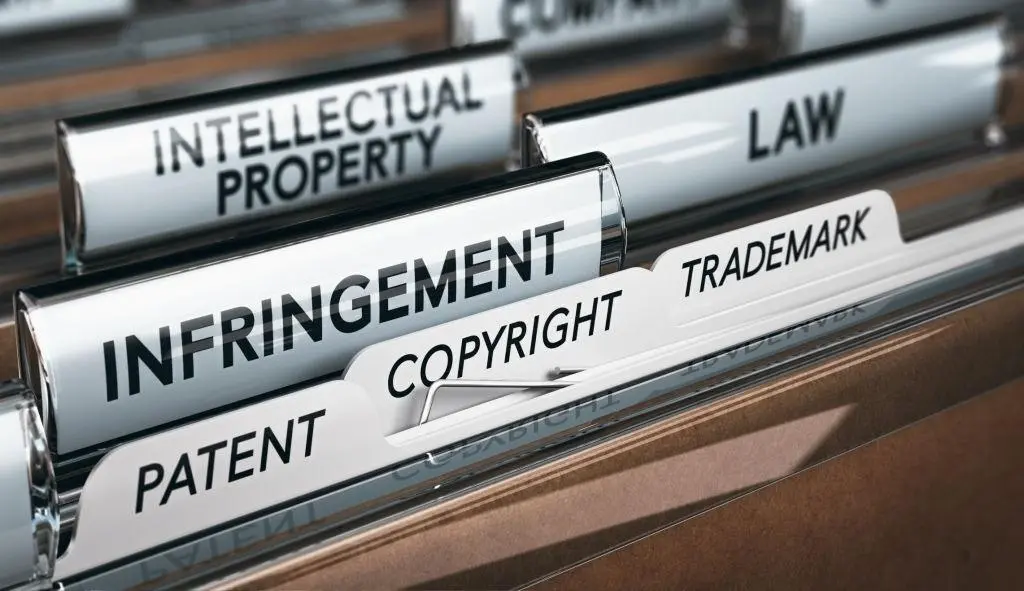
Trademarks and copyrights for products or services are extremely important to protecting brand identity. Marketing is crucial to success, and having strong trademarks can aid this. It is imperative to understand what type of property cannot be trademarked or copyrighted with the U.S. Patent and Trademark Office.
When considering trademarking or copyrighting your intellectual property, you must also evaluate how to secure your legal rights while doing so.
Property That Cannot Be Trademarked or Copyrighted
Certain property is completely ineligible for trademarks or copyright. Intellectual property not eligible for copyright includes ideas, methods, names, phrases, fonts, and well-known symbols or designs. For example, stage names or slogans don’t have enough creative ownership to be copyrightable. These kinds of work are much more suitable for trademarks. However, trademarks have their own unique stipulations.
Types of property you cannot trademark include generic phrases, deceptive or misleading language, government symbols or flags, geographical names, and surnames.
What Is the Difference Between Trademarks and Copyright?
While often used interchangeably in colloquial conversation, trademarks and copyrights have very different legal meanings in the United States. In 2025 alone, 415,780 copyrights were issued.
Trademarks are classified as words, catchphrases, and designs or images that are unique to identifying a brand or business. On the other hand, copyright is reserved for intellectual property that is a complete work. This includes artistic and educational works, such as books, movies, music, original physical media, and original digital media.
Protections Provided by Trademarks and Copyrights
While trademarks can provide memorable marketing for brands, they can also afford valuable legal protection for your intellectual property. Trademarks must be registered with a specific good or service to be valid. Determining whether what you provide is a good or a service might be difficult. Seeking counsel from an experienced trademark lawyer can relieve many of the pressures associated with the process.
When you register your trademark, the context in which it is classified is essential to protecting your property. For example, if you trademark your restaurant’s name, another restaurant nearby cannot legally use that same name in the same context.
Copyrights legally prevent your works from being distributed or plagiarized. For instance, if you upload an original video to the internet and someone reposts it without performing any transformation of the copyrighted work, they have violated your copyright.
In this case, you can issue a copyright claim or send a cease and desist letter concerning the content to either have their content removed or be issued reimbursement. YouTube experienced over 1 billion of these copyright claims on content in 2024.
How Long Do Trademarks and Copyrights Last?
Trademarks may last as long as they are renewed and in use, even indefinitely. Copyrights function very differently due to the nature of the works they encompass. In copyright cases, they only last the duration of the author or artist’s life, plus 70 years after their death. In cases of joint authors, the copyright is valid until 70 years after the last surviving author’s death.
Do You Have to Hire a Lawyer for Trademarks and Copyright Services?
You are not required to hire a trademark lawyer to obtain a trademark or copyright for your intellectual property unless you live outside the United States. However, a trademark lawyer can help you avoid making mistakes during the complicated process. A trademark attorney will be familiar with the relevant federal laws and how to properly file your case so that you can avoid delays and denials.
About The Kinder Law Group
The Kinder Law Group is committed to its client satisfaction, handling intellectual property issues across the world in over 120 countries. Our attorneys are prepared for any case, no matter the complexity.
Attorney Brian P. Kinder and Attorney Michael S. Doll are committed to the protection and preservation of your intellectual property. Both attorneys have extensive knowledge and experience in the field, making them uniquely equipped to handle your trademark or copyright request.
Our team has extensive experience working with courts in Irvine, Orange County, and Santa Ana.
FAQs
Q: What Are the Four Types of Intellectual Property?
A: The four types of intellectual property are trademarks, patents, copyrights, and trade secrets. All four types of intellectual property have distinctive eligibility requirements and protections they provide. Patents are aimed at protecting new inventions and machines. Trade secrets refer to recipes, client lists, and chemical formulas that are essential to a trade continuing business.
Q: What Are the Three Exceptions to Copyright?
A: The three exceptions to copyright are fair use, online instruction, and in-person instruction. These are the only exceptions that allow people to bypass copyright; otherwise, a license must be procured beforehand. The TEACH Act allows copyrighted material to be shown during in-class instruction. Outside of these cases, when your copyright is violated, you may be able to seek damages.
Q: How Much Does It Cost to Get a Trademark or Copyright?
A: The cost for getting a trademark or copyright without an attorney can be relatively cheap, but continual denials from these agencies can quickly incur large fees. When attempting to apply for trademarks and copyrights without the assistance of an attorney, your chance of being denied is much higher. A trademark attorney may sound costly, but they can ultimately cut costs in some scenarios.
Q: How Long Does It Take to Get a Trademark?
A: Getting a trademark in the U.S. usually takes up to or over a year. Processing a trademark requires extensive revision and examination. You can view the status of your trademark in the Trademark Status and Document Retrieval (TSDR) portal. The first examination period generally takes four to five months, and the second examination spans anywhere from 10 to 18 months while determining whether the trademark is registered or denied.
Contact The Kinder Law Group Today
Trademarking and copyrighting your intellectual property can be strong tools for marketing your business. Don’t hesitate to protect your creative works. Contact The Kinder Law Group to explore your options and learn more about what types of property cannot be trademarked or copyrighted.